Ringing birds is one of the methods used to help us understand movements and migrations, as well as population trends for these animals. Undertaken by trained and licenced individuals, it’s most commonly done with a mist net to catch the birds. However, for larger species and more intelligent species, such as raptors, this method doesn’t work as well.
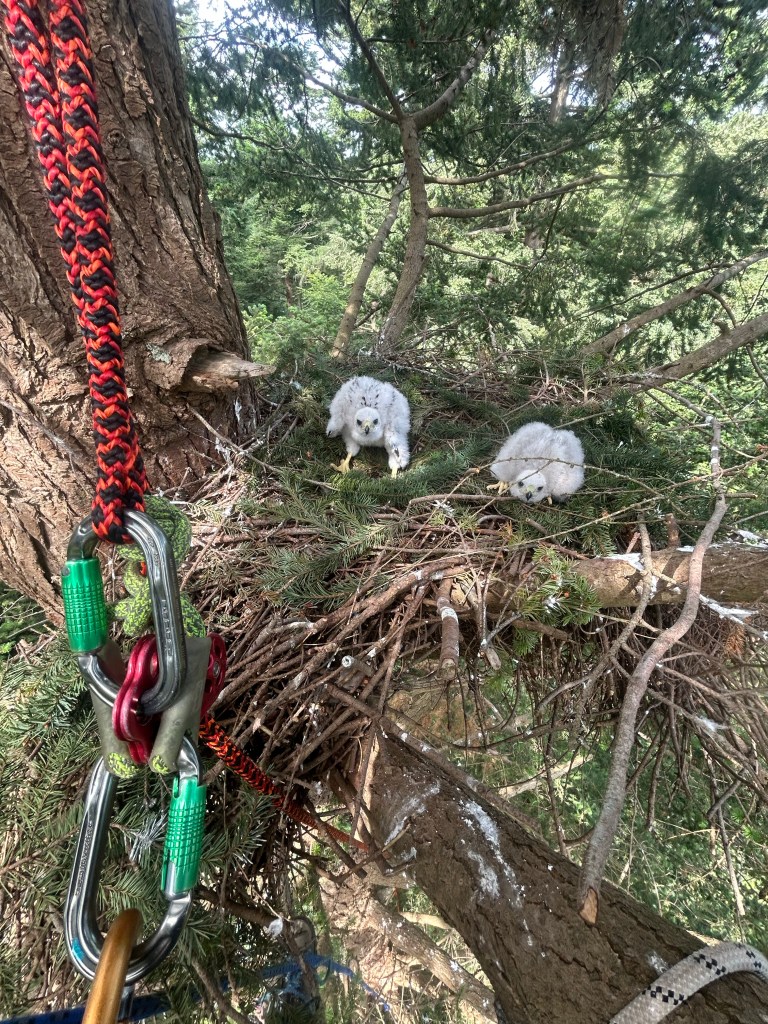
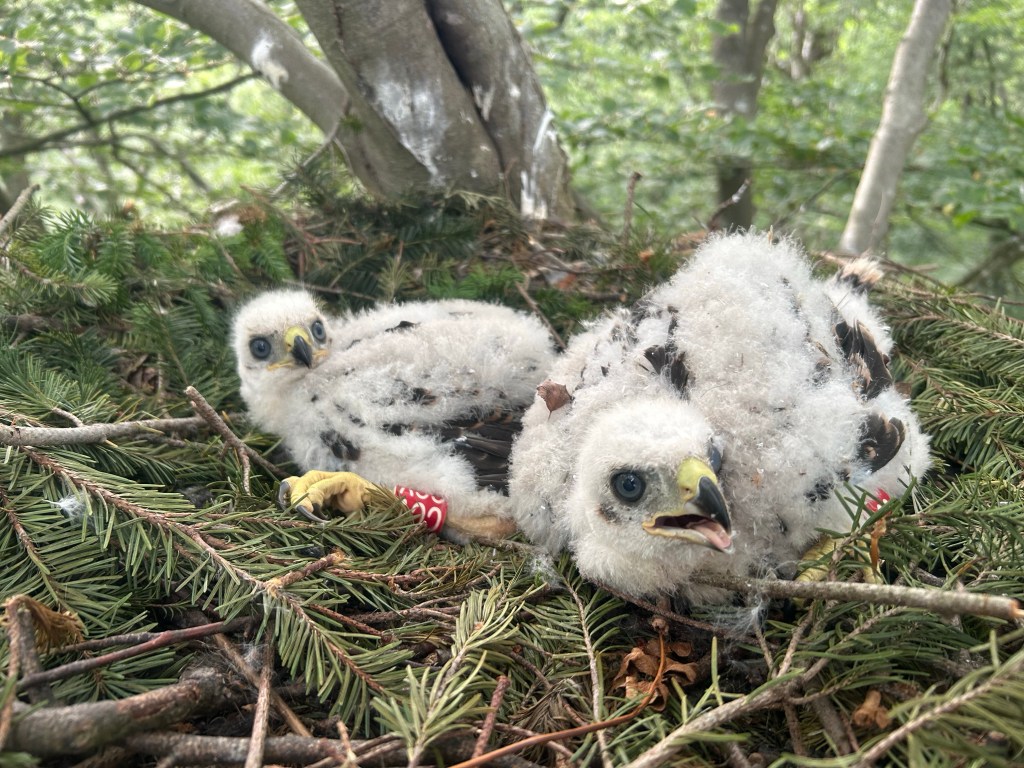
In this case the birds need to be ringed as chicks just before they fledge. This is also a great time to ring them as the maximum information can be gleaned across the entire lifetime of the animal.
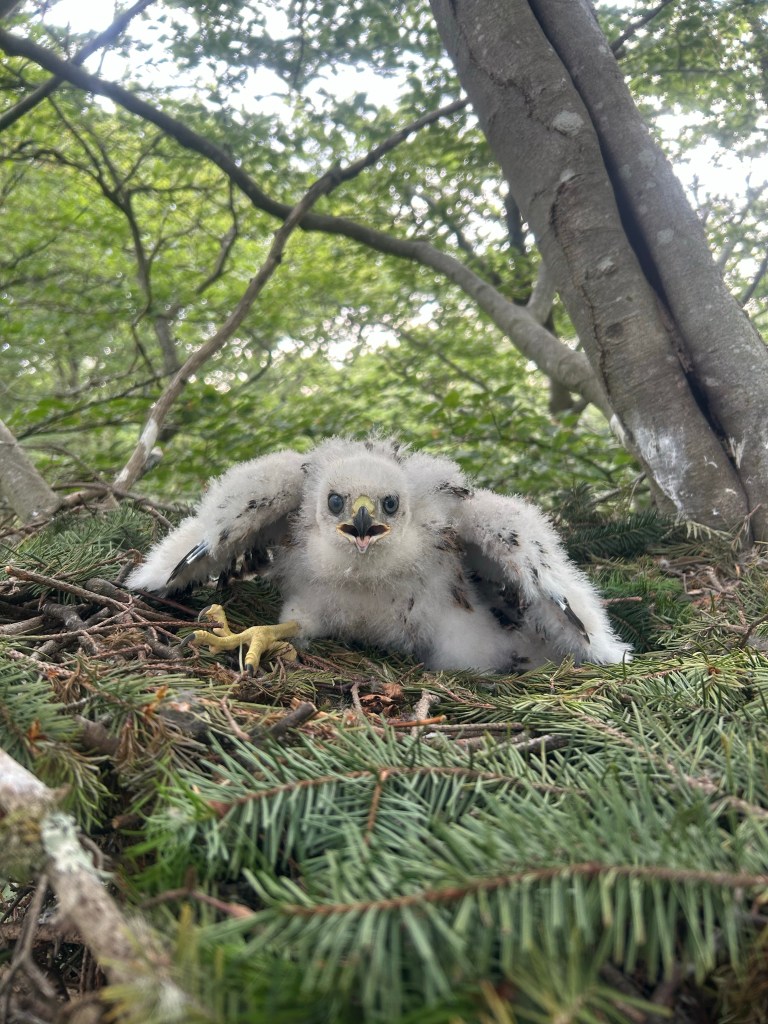
Many birds nest in trees and a lot of the raptors are no exception. Other species, such as ravens (Corvus corax) and other corvids also prefer to nest high in the canopy away from potential predators. Goshawks (Accipiter gentilis) are another canopy nesting species.
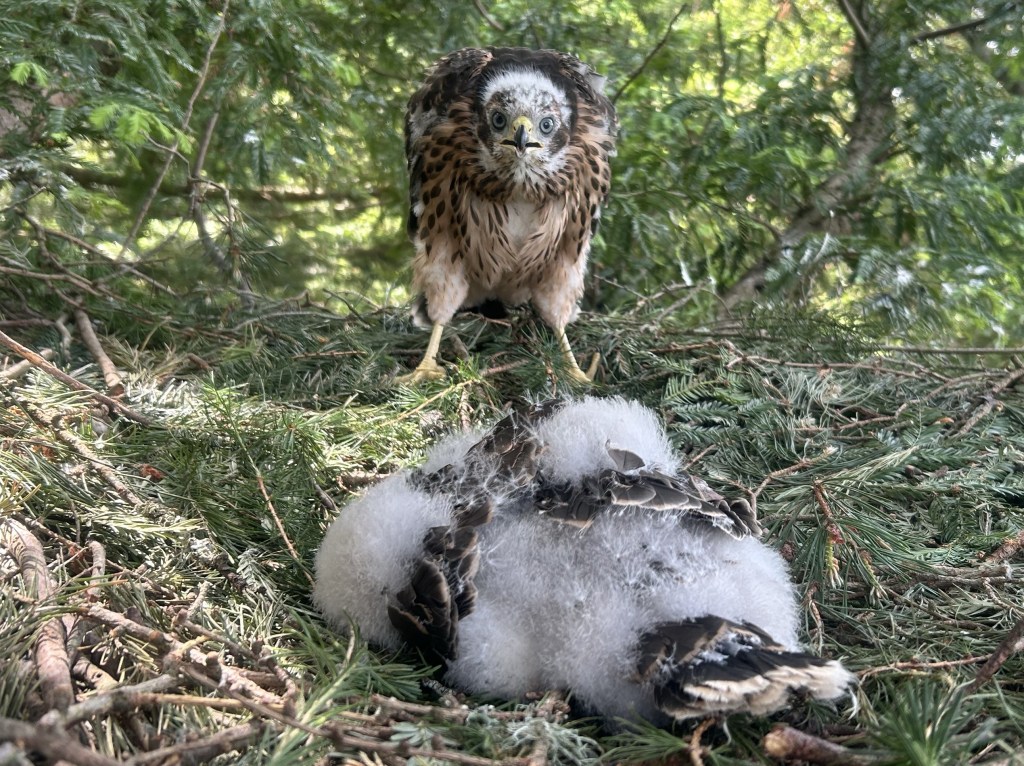

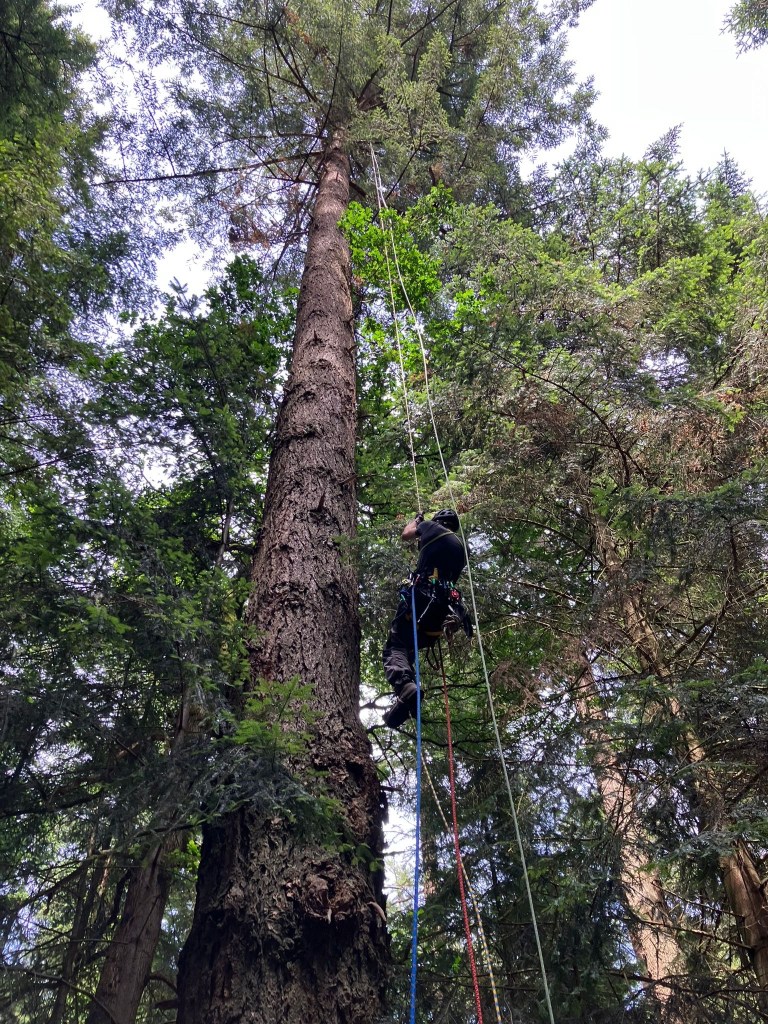
This is where we come in. Carefully climbing up to the nest we can then delicately place the chicks in a sturdy bag and send them down to the trained ringers waiting below. They take various measurements and collect data before placing the appropriate ring size on the legs of the birds.

Once that’s all done we haul the chicks back up to the nest in the bag and return them safely before heading back down to ground and leaving them at peace. Anyone that happens to see the bird from then on may be able to decipher the code on the ring and report the information to a centralised database such as the BTO Euring. This system has helped birds to become one of the best studied animal groups, but there’s still a lot to learn! Let’s hope we get some information on the birds we’ve ringed over the next few years!
 Ropey Science